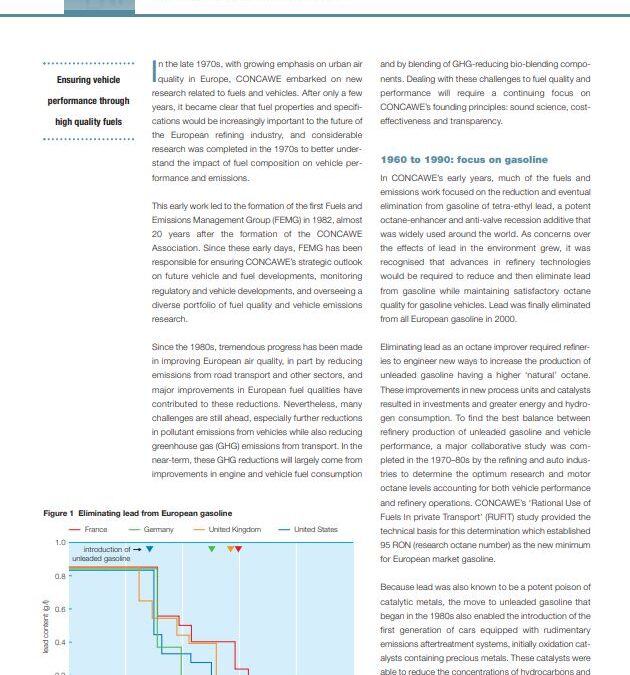
In the late 1970s, with growing emphasis on urban air quality in Europe, CONCAWE embarked on new research related to fuels and vehicles. After only a few years, it became clear that fuel properties and specifications would be increasingly important to the future...
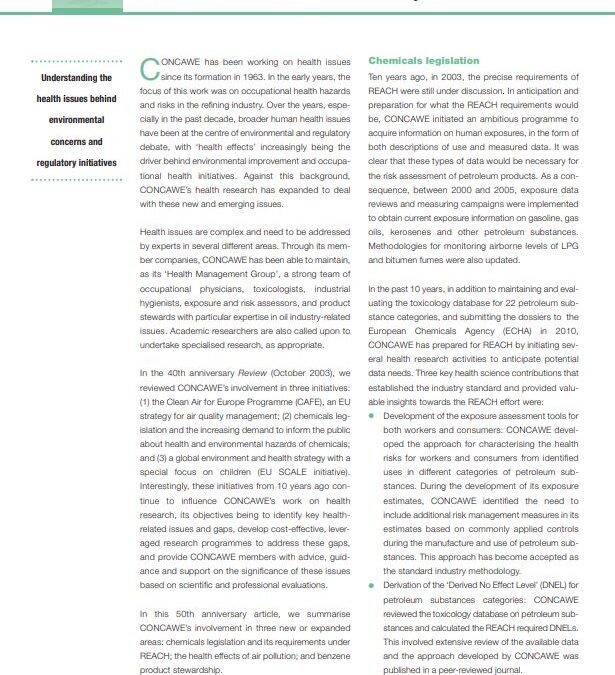
CONCAWE has been working on health issues since its formation in 1963. In the early years, the focus of this work was on occupational health hazards and risks in the refining industry. Over the years, especially in the past decade, broader human health issues have...
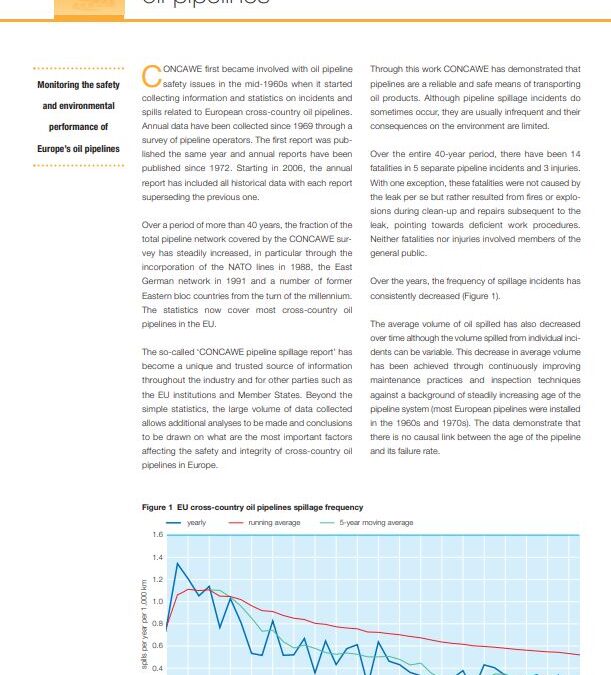
CONCAWE first became involved with oil pipeline safety issues in the mid-1960s when it started collecting information and statistics on incidents and spills related to European cross-country oil pipelines. Annual data have been collected since 1969 through a survey of...
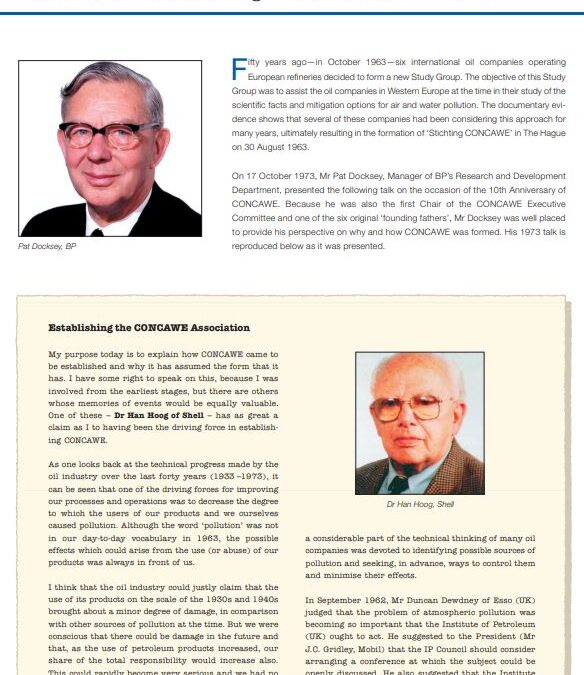
Fifty years ago—in October 1963—six international oil companies operating European refineries decided to form a new Study Group. The objective of this Study Group was to assist the oil companies in Western Europe at the time in their study of the scientific facts and...
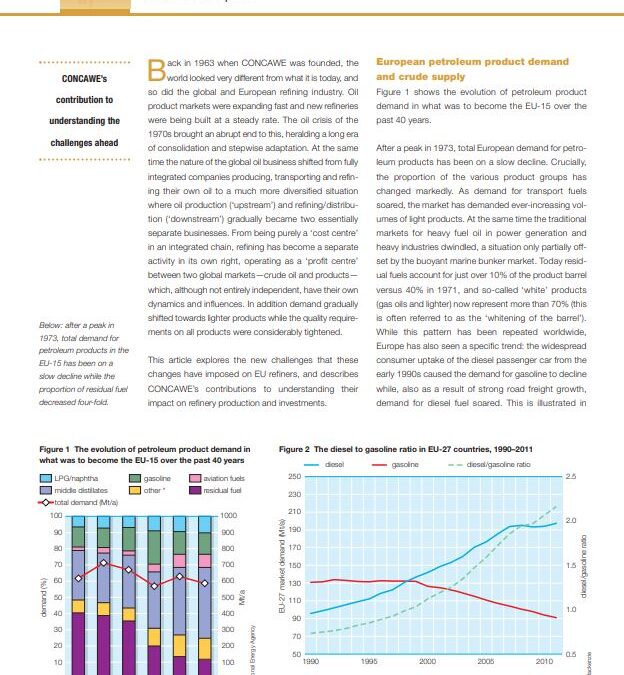
Back in 1963 when CONCAWE was founded, the world looked very different from what it is today, and so did the global and European refining industry. Oil product markets were expanding fast and new refineries were being built at a steady rate. The oil crisis of...